

Introduction: Your Opportunity to Work in Japan Starts Now
If you’re planning your career abroad, 2026 could be the perfect year to work in Japan without experience or with skills. at How to Get a Job in Japan in 2026? (Complete Guide for Beginners & Foreigners), Japan is actively hiring foreign workers due to a major labor shortage, and both IT and non-IT fields are open for international candidates.
From high-paying tech roles to healthcare, hospitality, and teaching jobs—opportunities are growing fast. But timing, preparation, and strategy matter.
Let’s break down how to get a job in Japan step by step in the simplest way possible.
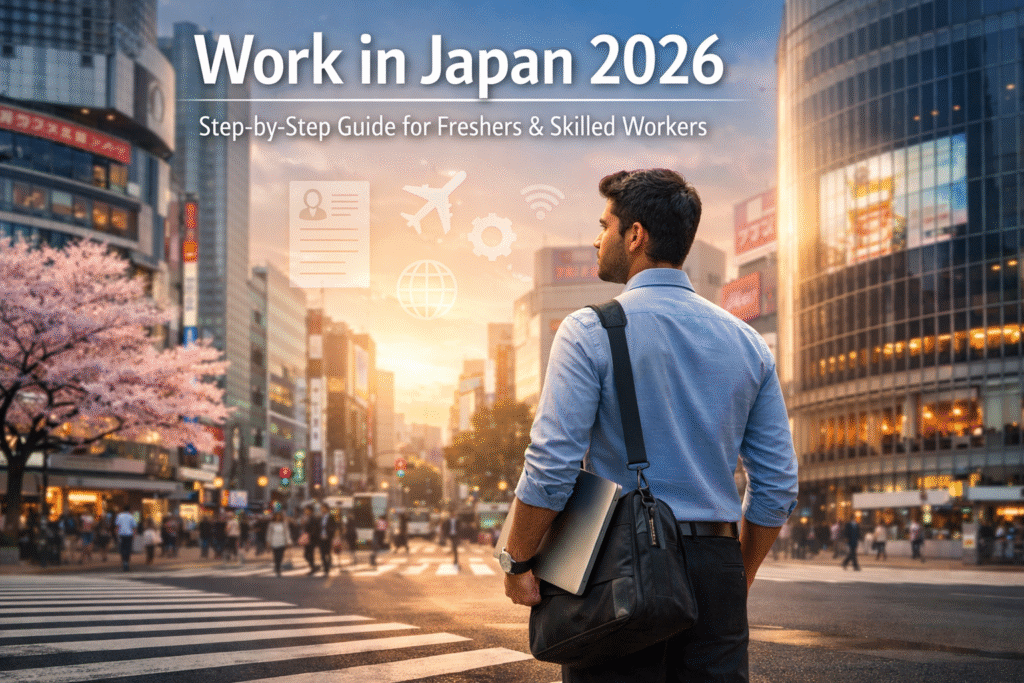
Overview of Job Opportunities in Japan
Japan offers a wide range of roles for foreigners:
IT Jobs in Japan 2026 for How to Get a Job in Japan in 2026? (Complete Guide for Beginners & Foreigners)
- Software Developer
- Data Analyst
- AI/ML Engineer
- Web Developer
- Cybersecurity Specialist
High demand + better salaries + English-friendly companies
Non-IT Jobs in Japan
- Nursing & Caregiver Jobs
- Hotel & Hospitality
- Teaching (English Instructor)
- Food & Restaurant Industry
Growing demand due to population gap
Why Japan is Hiring Foreign Workers
Japan is facing a serious workforce crisis:
- Aging population is increasing
- Birth rate is declining
- Fewer young workers available
- Because of this, the government and companies are opening doors for jobs in Japan for foreigners.
IT Jobs in Japan: Complete Breakdown
Freshers vs Experienced Candidates
Freshers:
- Easier to get hired in April intake
- Training programs available
- Focus on skills + projects
Experienced:
- Better salary packages
- Referral-based hiring is common
- More competition
Skills vs Japanese Language
There are two main ways to get hired:
- Strong technical skills → Japanese language optional
- Strong Japanese (JLPT N2/N1) → Skills can be moderate
Best strategy: Balance both
Hiring Season in Japan
- Applications Start: January – March
- Hiring Begins: April
- Training Period: April
- Work Starts: May
Apply early to increase your chances
Best Platforms to Apply
Company career pages
Job portals (TokyoDev, GaijinPot)
Tip: Directly message HRs on LinkedIn for better response
Non-IT Jobs in Japan
- Healthcare Jobs
- Nurses and caregivers are in huge demand
- Requires certification + Japanese language
Hospitality & Hotel Jobs
- Hotels, restaurants, tourism sector growing fast
- Good for beginners
Teaching Jobs (JET Program)
- Teach English in schools
- Basic Japanese is a plus
Non-IT jobs in Japan require more communication → language is important
Step-by-Step Process to Apply
Follow this simple roadmap:
- Choose your field (IT or Non-IT)
- Learn basic Japanese (at least N5/N4)
- Create a strong resume (Japan format)
- Apply on job portals & LinkedIn
- Prepare for interviews
- Get job offer + visa processing
Move to Japan
Japanese Language Requirements (JLPT Guide)
JLPT levels:
N5 – Beginner
N4 – Basic conversation
N3 – Intermediate
N2 – Business level (Highly recommended)
N1 – Advanced
Speaking skills (Kaiwa) are very important
Even if you pass N2, without speaking ability, chances decrease
Tips to Avoid Fake Jobs / Black Companies
Be careful while applying:
- Don’t pay money for job offers
- Avoid “too good to be true” offers
- Beware of 1-day selection without proper process
Always research company background
Some companies may offer IT roles but assign factory work
Interview Tips for Japan
Japanese interviews focus heavily on behavior:
- Wear full formal dress
- Be polite and respectful
- Be punctual
- Speak calmly and clearly
- Behavior matters more than skills sometimes
Pro Tips to Increase Selection Chances
- Build strong LinkedIn profile
- Learn basic Japanese speaking
- Do practical projects (for IT)
- Apply early (Jan–March)
- Use referrals whenever possible
FAQs
1. Can I get a job in Japan without Japanese language?
Yes, especially in IT. But basic Japanese improves chances.
2. Is Japan good for freshers?
Yes, Japan hires fresh graduates, especially in April intake.
3. What is the minimum JLPT level required?
N2 is preferred for most jobs, but N4/N5 is okay for beginners.
4. Can I work in Japan without experience?
Yes, especially in hospitality, caregiving, and entry-level IT roles.
5. When should I apply for jobs in Japan 2026?
Start applying between January and March 2026.
Conclusion: Start Your Japan Journey Today
Now that you understand how to get a job in Japan, the next step is action.
Japan is full of opportunities in 2026 — whether you’re from IT or non-IT background. The key is early preparation, skill-building, and smart applications.